
The manual won’t load at the quarry.
A phone call will.
Your technician calls from the machine, describes the fault and a voice agent walks them through it with your equipment manuals and your senior technicians’ know-how. No app and no data: an ordinary phone call is enough.
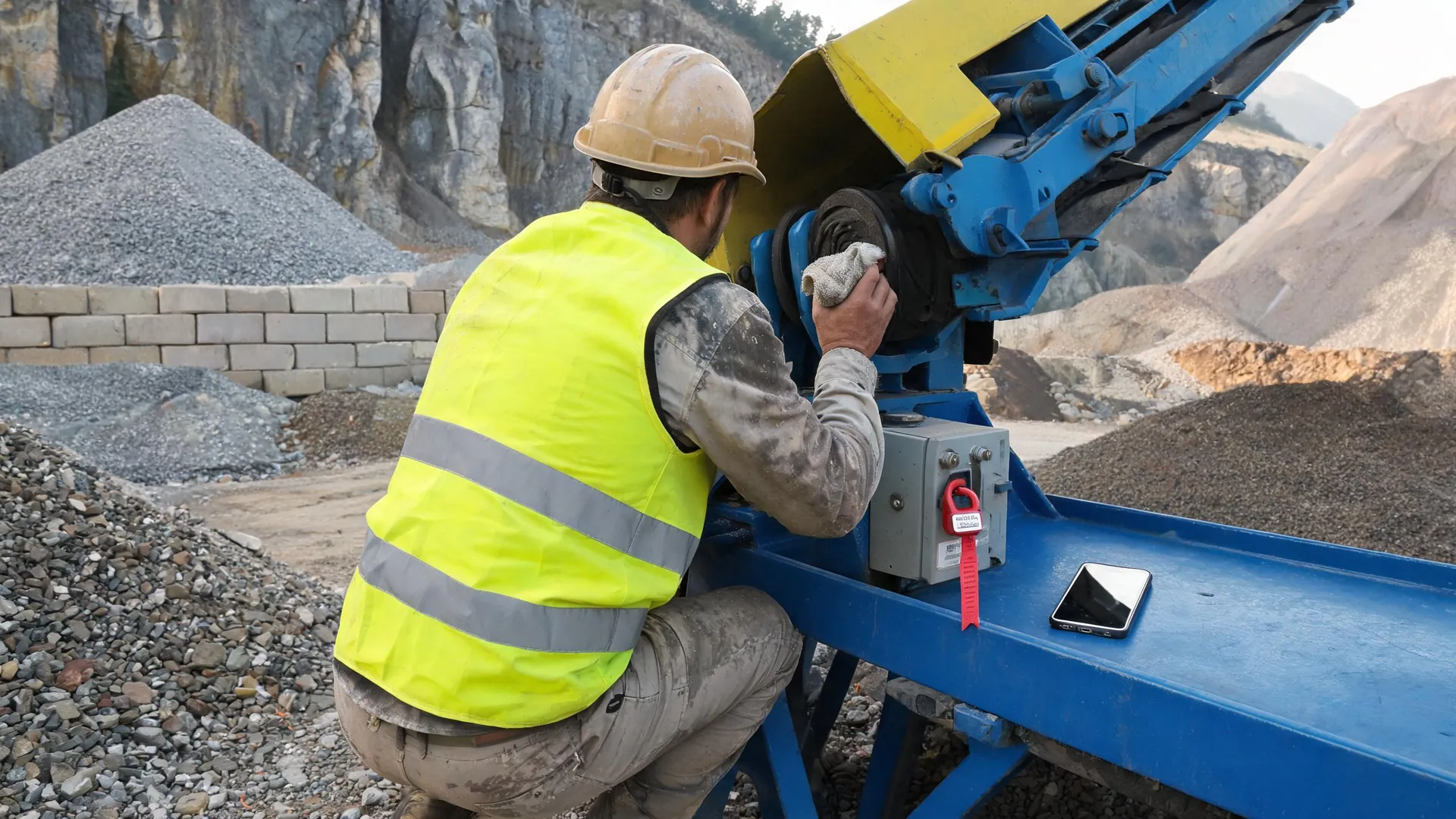
When a technician gets stuck on site, today they have three ways out.
All three cost time, and when the machine stops, so does production.
Call the senior technician
They know every machine, but they are at another face, on another shift or out of signal. And every time you call, you stop their work.
Look up the manual on a phone
If there is data to download it, if it is the latest version and if anything is readable through dust and gloves.
Wait for the specialist
The machine stays down, production too, and someone has to drive for hours.
A voice agent is not a fourth place to call. It is the first one that knows every machine you run, always picks up and interrupts nobody.
One call, start to finish. From fault to a running plant.
Four things a PDF manual cannot do.
It knows your machinery
It is trained on the manuals for your crushers, conveyors and screens, and on your senior technicians’ know-how. Every new machine you take on gets added.
It works on an ordinary phone call
No app, no data and no screen: the technician calls the way they call anyone, from the face, the workshop or the plant.
It never bypasses a safety system
Lockouts, emergency stops, guards: it never walks anyone through getting around them. If the fault touches a safety system, the call goes to a person with the full context.
The know-how stays in the company
What today lives in two or three people’s heads gets recorded, searchable and available at any hour.
We build it around your own equipment manuals.
You give us the PDFs for your machines and a few hours with your senior technicians. The agent answers from that, and only from that.
Every new machine you take on gets added to what it knows. Nobody has to be retrained.
Live in under 30 days.
You hand over the PDFs for the machines your team works with.
We capture the diagnoses that are not written in any manual.
Your technicians call and the agent answers from day one.